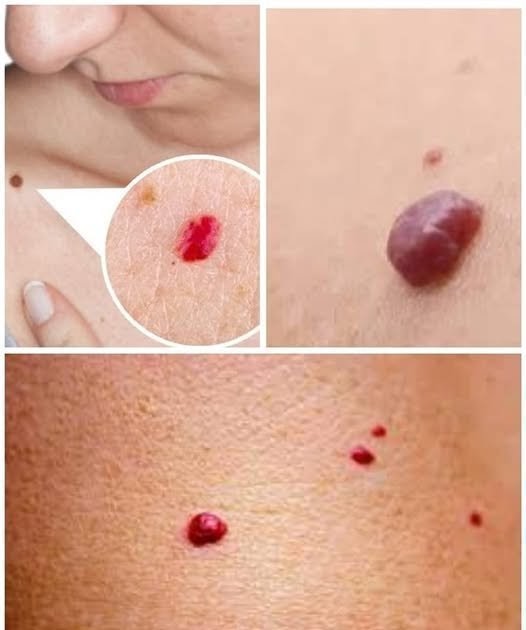
- What they look like: Small, bright red, dome-shaped bumps (1–5mm)
- Where they appear: Torso, arms, shoulders
- Cause: Clusters of dilated capillaries; linked to aging (common after 30)
- Action: None needed—they’re benign and painless
🌟 Good sign: Don’t blanch (turn white) when pressed
2. Petechiae (Potentially Serious)
- What they look like: Pinpoint, flat red/purple dots (like ink dots)—don’t blanch
- Where they appear: Legs, arms, torso, or inside mouth
- Cause: Tiny capillaries leak due to:
- Violent coughing/vomiting
- Certain medications (blood thinners, aspirin)
- Low platelet count (thrombocytopenia)
- Infections (e.g., meningitis, mononucleosis)
- Action: See a doctor if widespread, unexplained, or accompanied by fatigue/fever
⚠️ Red flag: Petechiae on the palate (roof of mouth) can signal serious infection
3. Purpura (Medical Attention Needed)
- What it looks like: Larger purple/red patches (larger than petechiae), often raised
- Cause: Blood vessel inflammation (vasculitis), clotting disorders, or autoimmune disease
- Action: Requires medical evaluation—especially if painful or spreading
4. Heat Rash (Miliaria)
- What it looks like: Tiny red bumps or blisters, often itchy
- Where: Chest, back, neck—areas prone to sweating
- Cause: Blocked sweat ducts in hot/humid weather
- Action: Cool down, wear loose clothing—resolves in days
5. Allergic Reaction or Contact Dermatitis
- What it looks like: Red, itchy, sometimes blistering patches
- Trigger: New soap, detergent, plants (poison ivy), or jewelry
- Action: Avoid trigger, use hydrocortisone cream; see a doctor if severe
6. Keratosis Pilaris (“Chicken Skin”)
- What it looks like: Rough, sandpaper-like red bumps (often on upper arms)
- Cause: Buildup of keratin in hair follicles
- Action: Harmless—moisturize with lactic acid or urea creams
7. Viral Exanthems (e.g., from colds or childhood illnesses)
- What it looks like: Fleeting red spots during or after a fever
- Common in: Kids after roseola, hand-foot-mouth, or mild viruses
- Action: Usually resolves on its own
🚨 When to See a Doctor Immediately
Seek medical care if red spots are accompanied by:
- Fever, chills, or confusion
- Rapid spreading or darkening
- Pain, swelling, or warmth in the area
- Bleeding or bruising easily
- Spots that don’t fade when pressed (use the “glass test”: press a clear glass firmly—if color remains, it’s non-blanching)
🩺 Glass test tip: Non-blanching rashes can indicate meningitis or vasculitis—seek emergency care.
💡 How to Monitor at Home
- Take a photo weekly to track changes
- Note symptoms: Itchy? Painful? Associated with illness?
- Avoid scratching—can cause infection or scarring
❤️ Final Thought: Know Your Skin—Without Fear
Your skin is your body’s largest organ—and it speaks.
Most red spots are just part of being human.
But when something feels “off,” trust your intuition.
A quick check-in with your doctor can bring peace of mind—or catch something early.
Because your health isn’t about perfection.
It’s about paying attention—with kindness, not fear.
🔴 Your skin tells a story. Listen gently.